A standard test image is a digital image file used across different institutions to test image processing and image compression algorithms. By using the same standard test images, different labs are able to compare results, both visually and quantitatively. The images are in many cases chosen to represent natural or typical images that a class of processing techniques would need to deal with. Other test images are chosen because they present a range of challenges to image reconstruction algorithms, such as the reproduction of fine detail and textures, sharp transitions and edges, and uniform regions. == Historical origins == Test images as transmission system calibration material probably date back to the original Paris to Lyon pantelegraph link. Analogue fax equipment (and photographic equipment for the printing trade) were the largest user groups of the standardized image for calibration technology until the coming of television and digital image transmission systems. == Common test image resolutions == The standard resolution of the images is usually 512×512 or 720×576. Most of these images are available as TIFF files from the University of Southern California's Signal and Image Processing Institute. Kodak has released 768×512 images, available as PNGs, that was originally on Photo CD with higher resolution, that are widely used for comparing image compression techniques.
BeyondCorp
BeyondCorp is an implementation of zero-trust computer security concepts creating a zero trust network. It is created by Google. == Background == It was created in response to the 2009 Operation Aurora. An open source implementation inspired by Google's research paper on an access proxy is known as "transcend". Google documented its Zero Trust journey from 2014 to 2018 through a series of articles in the journal ;login:. Google called their ZT network "BeyondCorp". Google implemented a Zero Trust architecture on a large scale, and relied on user and device credentials, regardless of location. Data was encrypted and protected from managed devices. Unmanaged devices, such as BYOD, were not given access to the BeyondCorp resources. == Design and technology == BeyondCorp utilized a zero trust security model, which is a relatively new security model that it assumes that all devices and users are potentially compromised. This is in contrast to traditional security models, which rely on firewalls and other perimeter defenses to protect sensitive data. === Trust === The corporate network grants no inherent trust, and all internal apps are accessed via the BeyondCorp system, regardless of whether the user is in a Google office or working remotely. BeyondCorp is related to Zero Trust architecture as it implements a true Zero Trust network, where all access is granted on identity, device, and authentication, based on robust underlying device and identity data sources. BeyondCorp works by using a number of security policies including authentication, authorization, and access control to ensure that only authorized users can access corporate resources. Authentication verifies the identity of the user, authorization determines whether the user has permission to access the requested resource, and access control policies restrict what the user can do with the resource. ==== Trust Inferrer ==== One of the main components in BeyondCorp's implementation is the Trust Inferrer. The Trust Inferrer is a security component (typically software) that looks at information about a user's device, like a computer or phone, to decide how much it can be trusted to access certain resources like important company documents. The Trust Inferrer checks things like the security of the device, whether it has the right software installed, and if it belongs to an authorized user. Based on all this information, the Trust Inferrer decides what the device can access and what it can't. === Security mechanisms === Unlike traditional VPNs, BeyondCorp's access policies are based on information about a device, its state, and its associated user. BeyondCorp considers both internal networks and external networks to be completely untrusted, and gates access to applications by dynamically asserting and enforcing levels, or “tiers,” of access. === Device Inventory Database === BeyondCorp utilized a Device Inventory Database and Device Identity that uniquely identifies a device through a digital certificate. Any changes to the device are recorded in the Device Inventory Database. The certificate is used to uniquely identify a device; however, additional information is required to grant access privileges to a resource. === Access Control Engine === Another important component of BeyondCorp's implementation is the Access Control Engine. Think of this as the brain of the Zero Trust architecture. The Access Control Engine is like a traffic cop standing at an intersection. Its job is to make sure that only authorized devices and users are allowed to access specific resources (like files or applications) on the network. It checks the access policy (the rules that say who can access what), the device's state (like whether it has the right software updates or security settings), and the resources being requested. Then it makes a decision on whether to grant or deny access based on all of this information. It helps ensure that only the right people and devices are allowed access to the network, which helps keep things secure. The Access Control Engine utilizes the output from the Trust Inferrer and other data that is fed into its system. == Usage == One of the first things Google did to implement a Zero Trust architecture was to capture and analyze network traffic. The purpose of analyzing the traffic was to build a baseline of what typical network traffic looked like. In doing so, BeyondCorp also discovered unusual, unexpected, and unauthorized traffic. This was very useful because it gave the BeyondCorp engineers critical information that assisted them in reengineering the system in a secure manner. Some of the benefits BeyondCorp realized by adopting a Zero Trust architecture include the ability to allow their employees to work securely from any location. It reduces the risk of data breaches since data and applications are protected and users and devices are constantly being verified. The Zero Trust architecture is scalable and can be adapted to the changing needs of the businesses and their users. Especially relevant in today's work-from-home era, BeyondCorp allows employees to access enterprise resources securely from any location, without the need for traditional VPNs.
Vinberg's algorithm
In mathematics, Vinberg's algorithm is an algorithm, introduced by Ernest Borisovich Vinberg, for finding a fundamental domain of a hyperbolic reflection group. Conway (1983) used Vinberg's algorithm to describe the automorphism group of the 26-dimensional even unimodular Lorentzian lattice II25,1 in terms of the Leech lattice. == Description of the algorithm == Let Γ < I s o m ( H n ) {\displaystyle \Gamma <\mathrm {Isom} (\mathbb {H} ^{n})} be a hyperbolic reflection group. Choose any point v 0 ∈ H n {\displaystyle v_{0}\in \mathbb {H} ^{n}} ; we shall call it the basic (or initial) point. The fundamental domain P 0 {\displaystyle P_{0}} of its stabilizer Γ v 0 {\displaystyle \Gamma _{v_{0}}} is a polyhedral cone in H n {\displaystyle \mathbb {H} ^{n}} . Let H 1 , . . . , H m {\displaystyle H_{1},...,H_{m}} be the faces of this cone, and let a 1 , . . . , a m {\displaystyle a_{1},...,a_{m}} be outer normal vectors to it. Consider the half-spaces H k − = { x ∈ R n , 1 | ( x , a k ) ≤ 0 } . {\displaystyle H_{k}^{-}=\{x\in \mathbb {R} ^{n,1}|(x,a_{k})\leq 0\}.} There exists a unique fundamental polyhedron P {\displaystyle P} of Γ {\displaystyle \Gamma } contained in P 0 {\displaystyle P_{0}} and containing the point v 0 {\displaystyle v_{0}} . Its faces containing v 0 {\displaystyle v_{0}} are formed by faces H 1 , . . . , H m {\displaystyle H_{1},...,H_{m}} of the cone P 0 {\displaystyle P_{0}} . The other faces H m + 1 , . . . {\displaystyle H_{m+1},...} and the corresponding outward normals a m + 1 , . . . {\displaystyle a_{m+1},...} are constructed by induction. Namely, for H j {\displaystyle H_{j}} we take a mirror such that the root a j {\displaystyle a_{j}} orthogonal to it satisfies the conditions (1) ( v 0 , a j ) < 0 {\displaystyle (v_{0},a_{j})<0} ; (2) ( a i , a j ) ≤ 0 {\displaystyle (a_{i},a_{j})\leq 0} for all i < j {\displaystyle i In informatics, a golden record is the valid version of a data element (record) in a single source of truth system. It may refer to a database, specific table or data field, or any unit of information used. A golden copy is a consolidated data set, and is supposed to provide a single source of truth and a "well-defined version of all the data entities in an organizational ecosystem". Other names sometimes used include master source or master version. The term has been used in conjunction with data quality, master data management, and similar topics. (Different technical solutions exist, see master data management). == Master data == In master data management (MDM), the golden copy refers to the master data (master version) of the reference data which works as an authoritative source for the "truth" for all applications in a given IT landscape. An operational data store (ODS) is used for operational reporting and as a source of data for the enterprise data warehouse (EDW). It is a complementary element to an EDW in a decision support environment, and is used for operational reporting, controls, and decision making, as opposed to the EDW, which is used for tactical and strategic decision support. An ODS is a database designed to integrate data from multiple sources for additional operations on the data, for reporting, controls and operational decision support. Unlike a production master data store, the data is not passed back to operational systems. It may be passed for further operations and to the data warehouse for reporting. An ODS should not be confused with an enterprise data hub (EDH). An operational data store will take transactional data from one or more production systems and loosely integrate it, in some respects it is still subject oriented, integrated and time variant, but without the volatility constraints. This integration is mainly achieved through the use of EDW structures and content. An ODS is not an intrinsic part of an EDH solution, although an EDH may be used to subsume some of the processing performed by an ODS and the EDW. An EDH is a broker of data. An ODS is certainly not. Because the data originates from multiple sources, the integration often involves cleaning, resolving redundancy and checking against business rules for integrity. An ODS is usually designed to contain low-level or atomic (indivisible) data (such as transactions and prices) with limited history that is captured "real time" or "near real time" as opposed to the much greater volumes of data stored in the data warehouse generally on a less-frequent basis. == General use == The general purpose of an ODS is to integrate data from disparate source systems in a single structure, using data integration technologies like data virtualization, data federation, or extract, transform, and load (ETL). This will allow operational access to the data for operational reporting, master data or reference data management. An ODS is not a replacement or substitute for a data warehouse or for a data hub but in turn could become a source. Embodied cognitive science is an interdisciplinary field of research, the aim of which is to explain the mechanisms underlying intelligent behavior. It comprises three main methodologies: the modeling of psychological and biological systems in a holistic manner that considers the mind and body as a single entity; the formation of a common set of general principles of intelligent behavior; and the experimental use of robotic agents in controlled environments. == Contributors == Embodied cognitive science borrows heavily from embodied philosophy and the related research fields of cognitive science, psychology, neuroscience and artificial intelligence. Contributors to the field include: From the perspective of neuroscience, Gerald Edelman of the Neurosciences Institute at La Jolla, Francisco Varela of CNRS in France, and J. A. Scott Kelso of Florida Atlantic University From the perspective of psychology, Lawrence Barsalou, Michael Turvey, Vittorio Guidano and Eleanor Rosch From the perspective of linguistics, Gilles Fauconnier, George Lakoff, Mark Johnson, Leonard Talmy and Mark Turner From the perspective of language acquisition, Eric Lenneberg and Philip Rubin at Haskins Laboratories From the perspective of anthropology, Edwin Hutchins, Bradd Shore, James Wertsch and Merlin Donald. From the perspective of autonomous agent design, early work is sometimes attributed to Rodney Brooks or Valentino Braitenberg From the perspective of artificial intelligence, Understanding Intelligence by Rolf Pfeifer and Christian Scheier or How the Body Shapes the Way We Think, by Rolf Pfeifer and Josh C. Bongard From the perspective of philosophy, Andy Clark, Dan Zahavi, Shaun Gallagher, and Evan Thompson In 1950, Alan Turing proposed that a machine may need a human-like body to think and speak: It can also be maintained that it is best to provide the machine with the best sense organs that money can buy, and then teach it to understand and speak English. That process could follow the normal teaching of a child. Things would be pointed out and named, etc. Again, I do not know what the right answer is, but I think both approaches should be tried. == Traditional cognitive theory == Embodied cognitive science is an alternative theory to cognition in which it minimizes appeals to computational theory of mind in favor of greater emphasis on how an organism's body determines how and what it thinks. Traditional cognitive theory is based mainly around symbol manipulation, in which certain inputs are fed into a processing unit that produces an output. These inputs follow certain rules of syntax, from which the processing unit finds semantic meaning. Thus, an appropriate output is produced. For example, a human's sensory organs are its input devices, and the stimuli obtained from the external environment are fed into the nervous system which serves as the processing unit. From here, the nervous system is able to read the sensory information because it follows a syntactic structure, thus an output is created. This output then creates bodily motions and brings forth behavior and cognition. Of particular note is that cognition is sealed away in the brain, meaning that mental cognition is cut off from the external world and is only possible by the input of sensory information. == The embodied cognitive approach == Embodied cognitive science differs from the traditionalist approach in that it denies the input-output system. This is chiefly due to the problems presented by the Homunculus argument, which concluded that semantic meaning could not be derived from symbols without some kind of inner interpretation. If some little man in a person's head interpreted incoming symbols, then who would interpret the little man's inputs? Because of the specter of an infinite regress, the traditionalist model began to seem less plausible. Thus, embodied cognitive science aims to avoid this problem by defining cognition in three ways. === Physical attributes of the body === The first aspect of embodied cognition examines the role of the physical body, particularly how its properties affect its ability to think. This part attempts to overcome the symbol manipulation component that is a feature of the traditionalist model. Depth perception, for instance, can be better explained under the embodied approach due to the sheer complexity of the action. Depth perception requires that the brain detect the disparate retinal images obtained by the distance of the two eyes. In addition, body and head cues complicate this further. When the head is turned in a given direction, objects in the foreground will appear to move against objects in the background. From this, it is said that some kind of visual processing is occurring without the need of any kind of symbol manipulation. This is because the objects appearing to move the foreground are simply appearing to move. This observation concludes then that depth can be perceived with no intermediate symbol manipulation necessary. A more poignant example exists through examining auditory perception. Generally speaking the greater the distance between the ears, the greater the possible auditory acuity. Also relevant is the amount of density in between the ears, for the strength of the frequency wave alters as it passes through a given medium. The brain's auditory system takes these factors into account as it process information, but again without any need for a symbolic manipulation system. This is because the distance between the ears for example does not need symbols to represent it. The distance itself creates the necessary opportunity for greater auditory acuity. The amount of density between the ears is similar, in that it is the actual amount itself that simply forms the opportunity for frequency alteration. Thus under consideration of the physical properties of the body, a symbolic system is unnecessary and an unhelpful metaphor. === The body's role in the cognitive process === The second aspect draws heavily from George Lakoff's and Mark Johnson's work on concepts. They argued that humans use metaphors whenever possible to better explain their external world. Humans also have a basic stock of concepts in which other concepts can be derived from. These basic concepts include spatial orientations such as up, down, front, and back. Humans can understand what these concepts mean because they can directly experience them from their own bodies. For example, because human movement revolves around standing erect and moving the body in an up-down motion, humans innately have these concepts of up and down. Lakoff and Johnson contend this is similar with other spatial orientations such as front and back too. As mentioned earlier, these basic stocks of spatial concepts are the basis in which other concepts are constructed. Happy and sad for instance are seen now as being up or down respectively. When someone says they are feeling down, what they are really saying is that they feel sad for example. Thus the point here is that true understanding of these concepts is contingent on whether one can have an understanding of the human body. So the argument goes that if one lacked a human body, they could not possibly know what up or down could mean, or how it could relate to emotional states. [I]magine a spherical being living outside of any gravitational field, with no knowledge or imagination of any other kind of experience. What could UP possibly mean to such a being? While this does not mean that such beings would be incapable of expressing emotions in other words, it does mean that they would express emotions differently from humans. Human concepts of happiness and sadness would be different because human would have different bodies. So then an organism's body directly affects how it can think, because it uses metaphors related to its body as the basis of concepts. === Interaction of local environment === A third component of the embodied approach looks at how agents use their immediate environment in cognitive processing. Meaning, the local environment is seen as an actual extension of the body's cognitive process. The example of a personal digital assistant (PDA) is used to better imagine this. Echoing functionalism (philosophy of mind), this point claims that mental states are individuated by their role in a much larger system. So under this premise, the information on a PDA is similar to the information stored in the brain. So then if one thinks information in the brain constitutes mental states, then it must follow that information in the PDA is a cognitive state too. Consider also the role of pen and paper in a complex multiplication problem. The pen and paper are so involved in the cognitive process of solving the problem that it seems ridiculous to say they are somehow different from the process, in very much the same way the PDA is used for information like the brain. Another example examines how humans control and manipulate their environment In multi-armed bandit problems, IMED (for Indexed Minimum Empirical Divergence) is an algorithm developed in 2015 by Junya Honda and Akimichi Takemura. It is the first algorithm proved to be asymptotically optimal respect to the problem-dependant Lai–Robbins lower bound for distributions in ( − ∞ , 1 ] {\displaystyle (-\infty ,1]} . == Multi-armed bandit problem == The Multi-armed bandit problem is a sequential game where one player has to choose at each turn between K {\displaystyle K} actions (arms). Behind every arm a {\displaystyle a} there is an unknown distribution ν a {\displaystyle \nu _{a}} that lies in a set D {\displaystyle {\mathcal {D}}} known by the player (for example, D {\displaystyle {\mathcal {D}}} can be the set of Gaussian distributions or Bernoulli distributions). At each turn t {\displaystyle t} the player chooses (pulls) an arm a t {\displaystyle a_{t}} , he then gets an observation X t {\displaystyle X_{t}} of the distribution ν a t {\displaystyle \nu _{a_{t}}} . === Regret minimization === The goal is to minimize the regret at time T {\displaystyle T} that is defined as R T := ∑ a = 1 K Δ a E [ N a ( T ) ] {\displaystyle R_{T}:=\sum _{a=1}^{K}\Delta _{a}\mathbb {E} [N_{a}(T)]} where μ a := E [ ν a ] {\displaystyle \mu _{a}:=\mathbb {E} [\nu _{a}]} is the mean of arm a {\displaystyle a} μ ∗ := max a μ a {\displaystyle \mu ^{}:=\max _{a}\mu _{a}} is the highest mean Δ a := μ ∗ − μ a {\displaystyle \Delta _{a}:=\mu ^{}-\mu _{a}} N a ( t ) {\displaystyle N_{a}(t)} is the number of pulls of arm a {\displaystyle a} up to turn t {\displaystyle t} The player has to find an algorithm that chooses at each turn t {\displaystyle t} which arm to pull based on the previous actions and observations ( a s , X s ) s < t {\displaystyle (a_{s},X_{s})_{sGolden record (informatics)
Operational data store
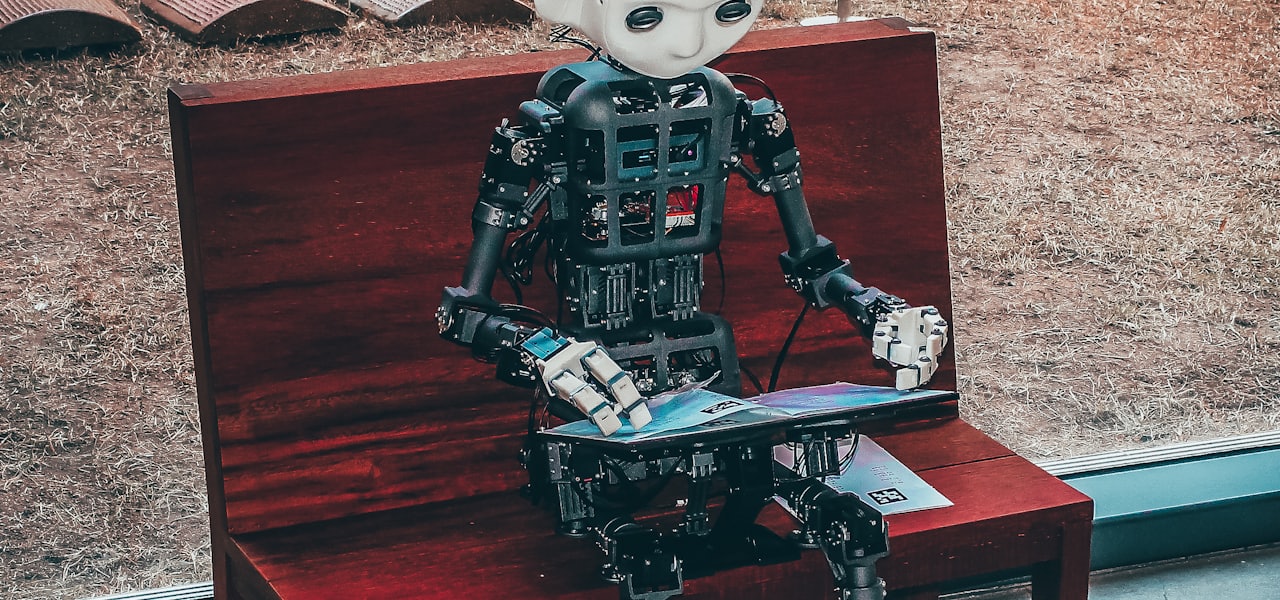
Embodied cognitive science
Algorithm IMED